n. · the HLTAID012 unit of competency, taught here in plain English.
Provide First Aid in an education and care setting.
§ HLTAID012 · overview
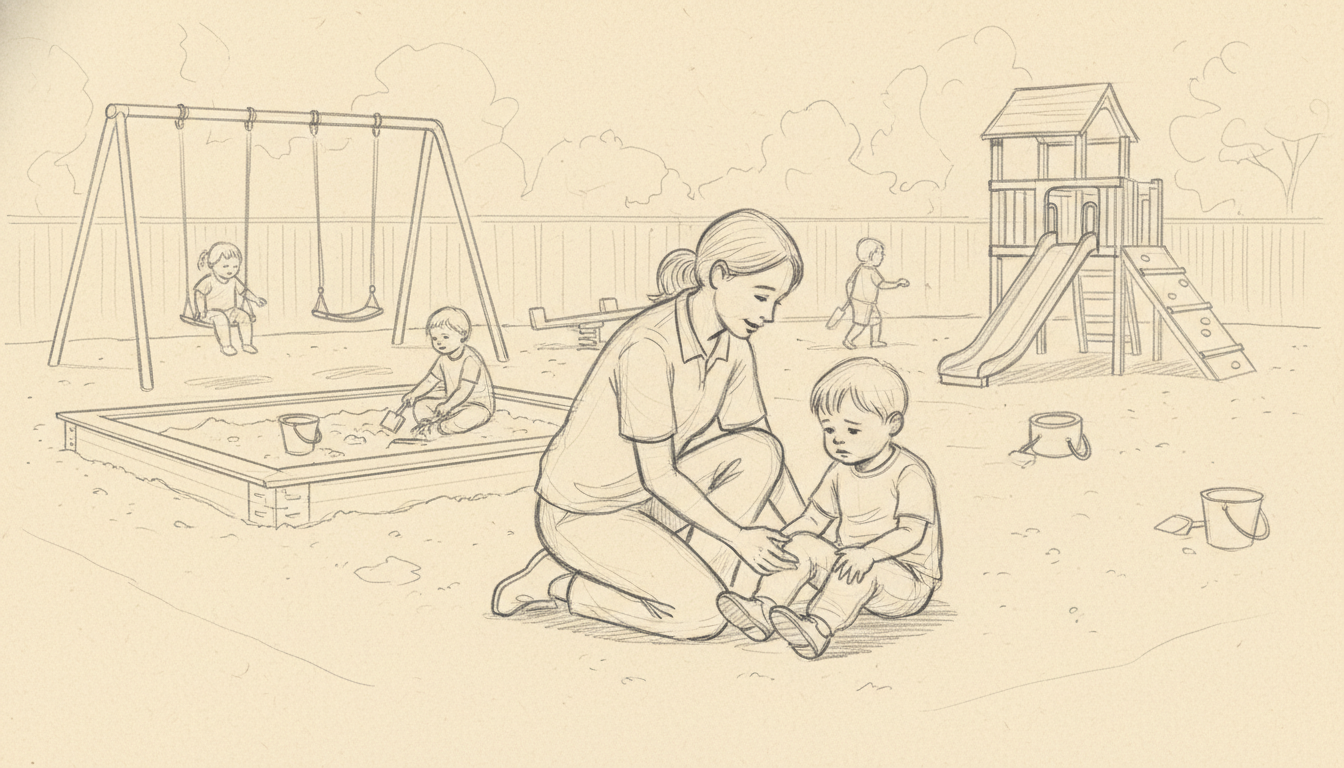
This unit describes the skills and knowledge required to provide a first aid response to infants, children and adults in line with first aid guidelines determined by the Australian Resuscitation Council (ARC) and other Australian national peak clinical bodies.
§ HLTAID012 · status
§ HLTAID012 · contents
Guidelines and procedures.
- arc_guidelines ARC guidelines — where Australian first aid actually comes from G2G3G4G5G6G7G8
- peak_body_guidelines Peak-body guidelines — when ANZCOR isn't the only voice in the room
- incident_hazards Incident hazards and risk minimisation — looking before you leap G2
- infection_control Infection control — gloves, barriers, and the standard precautions G5
- currency_requirements Currency requirements — why your certificate expires
- codes_of_practice Codes of practice — the rulebook your workplace runs on
- workplace_procedures Workplace procedures — what your workplace expects you to do
- first_aid_kit_contents First-aid kit contents — what's in the box, and why
Legal, workplace and community considerations.
- education_and_care_services_law Education and Care Services National Law — the rules that govern your service
- education_and_care_state_regulations State and territory regulations — how the National Law lands in your jurisdiction
- duty_of_care Duty of care — what you owe a casualty, and when
- skills_and_limitations Knowing your own skills and limitations — the most professional skill in first aid
- parental_consent Parental consent — what the parent has agreed to, and what an emergency overrides
- privacy_and_confidentiality Privacy and confidentiality — what happens to what you saw
- rescuer_and_child_stress_support Rescuer and child stress support — looking after the educator and the child after a serious incident
Considerations when providing CPR.
- upper_airway Upper airway and positional change — why position is the cheapest airway G3G4
- cpr_duration_and_cessation How long to do CPR — and when to stop G8
- aed_use_on_children AED use on children — paediatric pads, adult pads, and the rule that the AED is for any age G7
- aed_safety_and_maintenance AED safety and maintenance — keeping the box ready for the day G7
- chain_of_survival The chain of survival — four links and a casualty G2G8
- accessing_emergency_services How to call emergency services — three digits, five sentences, the rest of the response G2
Techniques for providing CPR to adults, children and infants.
- recognising_unconscious_not_breathing Recognising unconscious and not breathing — the call that starts CPR G3G5
- compression_rate_and_depth Compression rate, ratio and depth — the four numbers you have to get right G6G8
- hand_positioning_for_compressions Hand positioning for compressions — where the heels of your hands actually go G6
- anatomy_for_cpr_age_groups CPR anatomy across the ages — why an adult, a child and an infant aren't the same casualty G6G8
Signs, symptoms and management of the following in children.
- allergic_reaction Allergic reaction — when the immune system overreacts to something harmless G9-2-7
- anaphylaxis Anaphylaxis — recognise and respond G9-2-7
- asthma Asthma — recognise the attack, deliver the puffer G9-2-5
- bleeding Bleeding — pressure, pressure, pressure G9-1-1
- breathing_difficulties Breathing difficulties in children — what to look for and when to escalate G9-2-5G9-2-8
- burns Burns — twenty minutes of cool running water G9-1-3
- choking Choking — back blows, chest thrusts, no Heimlich G4
- diabetes Diabetes — when in doubt, give sugar G9-2-9
- dehydration Dehydration in children — why little bodies lose fluid fast and how to spot it
- drowning Drowning — five breaths first, then CPR G9-3-2
- envenomation Envenomation — pressure immobilisation, and the rules that change by creature G9-4-1G9-4-2G9-4-3G9-4-5G9-4-8
- eye_injuries Eye injuries — irrigate, cover, never press
- febrile_convulsions Febrile convulsions — when a fever causes a seizure in a young child G9-2-4
- fever Fever in children — what it is, what it isn't, and what to do about it
- fractures_and_sprains Fractures and sprains — rest, immobilise, support
- head_neck_spinal_injuries Head, neck and spinal injuries — don't make it worse G9-1-4G9-1-6
- hypothermia Hypothermia — handle gently, rewarm slowly G9-3-3
- hyperthermia Hyperthermia — cool fast, cool first G9-3-4
- minor_wounds Minor wounds — cleaning, dressing, and the small things that prevent infection G9-1-1
- pain Pain in children — recognising it, taking it seriously, and what an educator can do
- shock Shock — recognise the picture, treat the cause G9-2-3
- nosebleed Nosebleed — pinch the soft bit, ten minutes by the clock G9-1-1
- poisoning Poisoning — call Poisons Information first G9-5-1
- seizures Seizures — protect, time, recover G9-2-4
- vomiting_and_diarrhoea Vomiting and diarrhoea — the most common reason a child becomes unwell at the service
Identification and management of a sick infant or child.
- signs_of_acute_illness_in_children Signs of acute illness in children — the recognition framework that catches the seriously sick child
- referral_and_ambulance_response Referral and ambulance response — when to send a child up the chain, and how to do it well
- emergency_action_plans Emergency action plans — the documents that turn a child's known condition into a step-by-step response
- communication_and_distraction Communication and distraction — talking to a frightened child while you provide first aid
- physiological_differences_in_children Physiological differences in children — why kids are not just small adults
§ HLTAID012 · knowledge check
Test your understanding of the online theory with a short knowledge check. 40 questions drawn from the full question bank — pass 80% to earn your Certificate of Study.
Take the knowledge check →§ note
This site is operated by Australia Wide First Aid (RTO 31961). It is a non-accredited study aid only. It does not issue Statements of Attainment. Completing this site does not fulfil the assessment requirements for any HLTAID unit of competency.