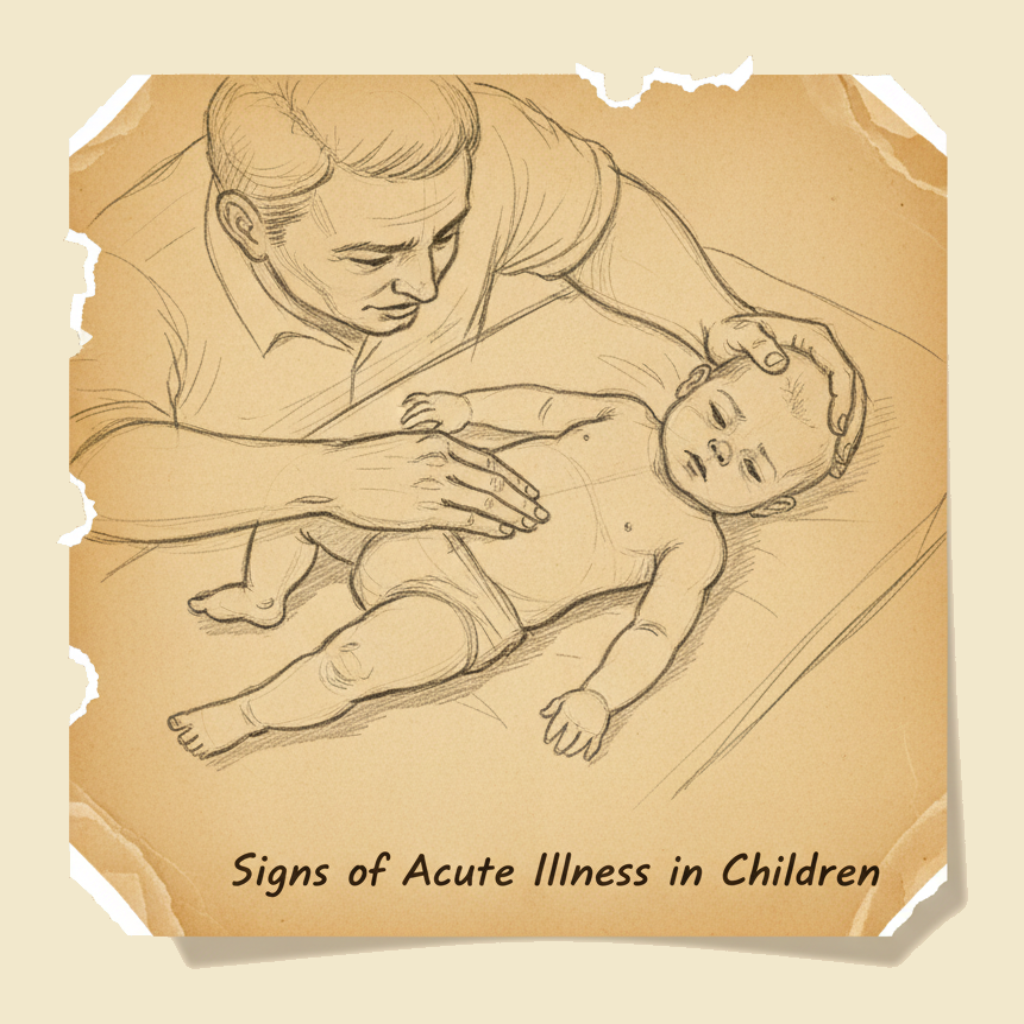
Why this chapter is the most important one in the unit
If there is a single skill that determines whether an educator catches a serious illness in time, it is the recognition of a sick child. Most paediatric emergencies do not arrive announced. They arrive as a child who looked OK at drop-off, became a bit grumpy by morning tea, was not eating well at lunch, was tired by afternoon — and at some point in that arc crossed from "having a bad day" into "actually unwell" and needed action that the educator should have taken hours earlier. The educators who catch these situations early are not the ones who happen to be lucky; they are the ones who know what to look for. G9.2.9
This chapter is the recognition framework for acute illness in infants and children — what to observe, how to interpret what you see, and when the picture is the picture of a child who needs the next level of care. The companion chapters in this topic are about what to do once you have decided the child is unwell: the referral and ambulance response chapter, the emergency action plans chapter, and the communication and distraction chapter. The condition-specific chapters in the signs and symptoms topic are the recognition of particular illnesses; this chapter is the general recognition that something is wrong.
§ Instructor's note
The teaching point of this chapter is that the recognition of a sick child is a learnable skill, not an instinct that some educators have and others don't. It is built on a structured observation framework — appearance, work of breathing, circulation, behaviour — and on the calibration that comes from looking carefully at children every day. Drill the rule: if a child has changed from how they were earlier today, or from how they normally are, take it seriously, look more carefully, and act on what you see.
The starting question — has this child changed?
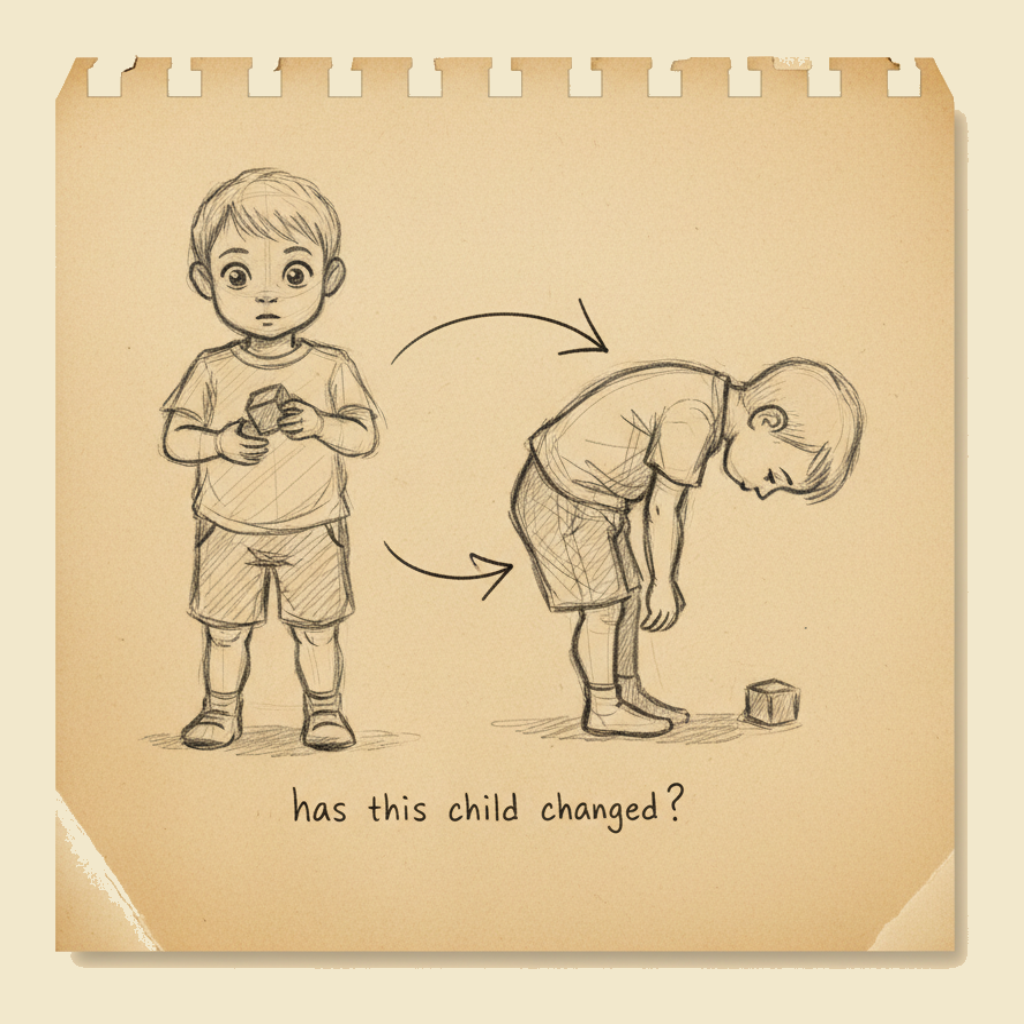
The educator's most powerful diagnostic tool is familiarity with the child. You know how Sam normally behaves, how loudly Aisha normally laughs, how much Charlie normally eats at lunch, how often Maya normally has a wet nappy, how Mateo normally interacts with the other children. When any of those changes — when the child is doing less of something they normally do, or doing more of something they normally don't — that is a signal worth paying attention to.
The simplest version of the question is: does this child look the same as they did this morning, or different? And: does this child look the same as they normally do, or different? A child who has changed is a child to look at more carefully.
This is why the educator who has known a child for months has an advantage over the educator who is meeting them for the first time. The familiar carer notices the small changes that the unfamiliar carer would miss. It is also why handover at shift change, and the conversation with the parents at drop-off, matter so much: they put the educator in a position to know what "normal" looks like.
The structured observation — appearance, breathing, circulation, behaviour
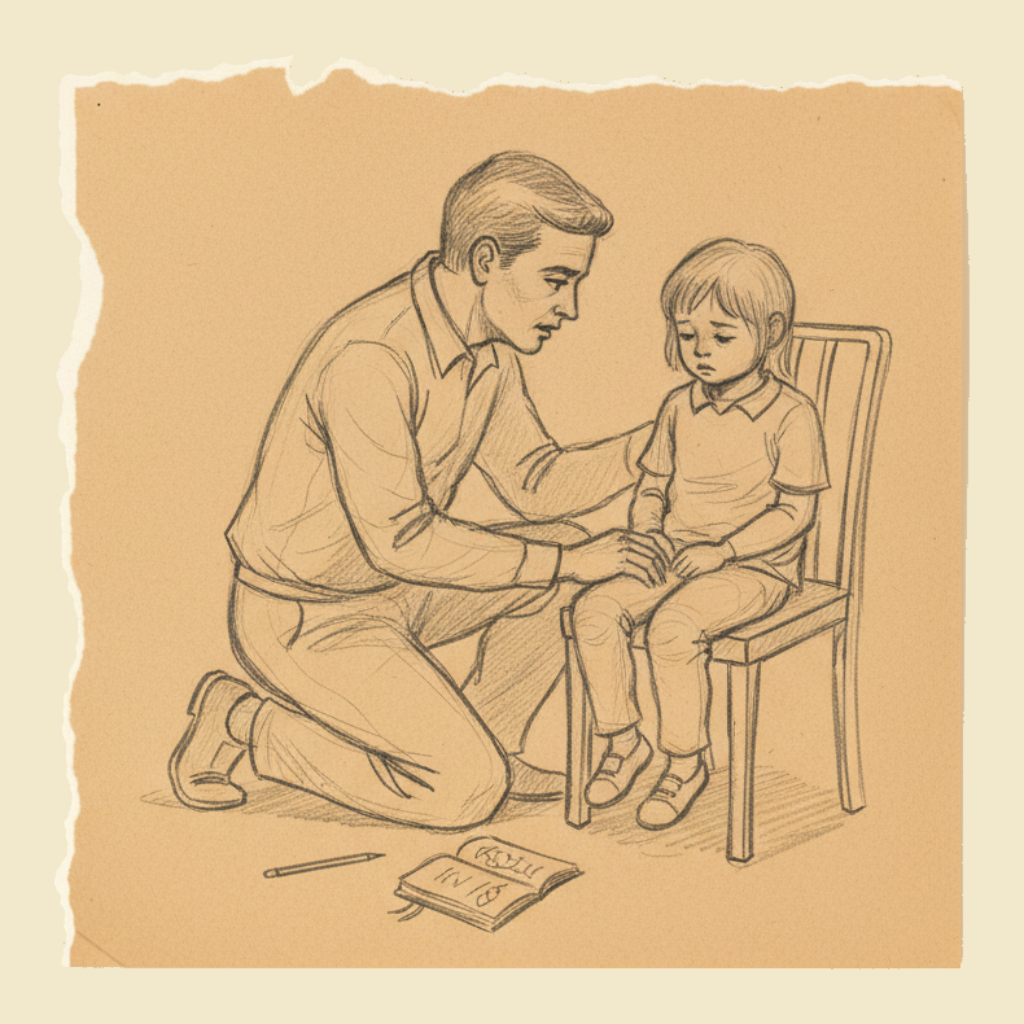
The recognition framework that paediatric emergency departments use, and that translates well to an ECEC setting, is built on four channels of observation. You look at each one in turn and form a picture from the combination.
Appearance
The child's general appearance is the first and most powerful signal. A child who looks well usually is well; a child who looks unwell almost always is. The components:
- Tone — a healthy child has normal muscle tone. They sit up, hold their head up, move their limbs purposefully. A child who is floppy, limp, or holding themselves stiffly is abnormal.
- Activity — engaged with the surroundings, looking around, reacting to people and noises, moving voluntarily. A child who is unusually still, withdrawn, or lethargic is abnormal.
- Eye contact — meets your gaze, follows your face, recognises familiar adults. A child who will not make eye contact, who stares blankly, or who is glassy-eyed is abnormal.
- Consolability — responds to comfort. A crying child who calms when picked up is normal. A child who cannot be consoled, or who has stopped crying because they are exhausted, is abnormal.
- Speech or cry — for older children, normal speech and tone. For infants, a normal vigorous cry. A high-pitched or weak cry, a whimper, or unusual quietness in a child who is normally vocal is abnormal.
Together, these are sometimes summarised as the child's "look". The look is the global impression you form in the first few seconds. Trust it. If a child looks unwell to you — even if you cannot say why — that impression is usually correct, and it is usually the early sign that something is wrong.
Work of breathing
The second channel is the breathing — not just the rate, but the effort required to breathe. Paediatric respiratory problems are extremely common, and increased work of breathing is one of the earliest signs of trouble. The full detail is in the breathing difficulties chapter; the short version is:
- Rate — fast for the child.
- Effort — nasal flaring, recession (skin sucked in between or under the ribs or above the breastbone), accessory muscle use, head bobbing in infants.
- Sounds — stridor (inspiratory, upper airway), wheeze (expiratory, lower airway), grunting (the worst — late sign).
- Position — sitting forward, refusing to lie down, tripod posture.
Any of these changes how worrying the child is. A child whose appearance is OK but who has increased work of breathing is on the way to a problem. A child whose appearance is poor and whose breathing is laboured is in serious trouble.
Circulation to the skin
The third channel is circulation, judged from the skin and the peripheral perfusion. The body responds to circulatory stress (shock, dehydration, severe illness) by shunting blood away from the skin to maintain core perfusion, and the result is visible on the surface:
- Skin colour — normally pink and warm. Pale, mottled, grey, or blue (cyanotic) is abnormal.
- Skin temperature — normally warm. Cool hands and feet despite a warm core can indicate poor peripheral perfusion.
- Capillary refill — press the skin (chest, fingertip, forehead) for two seconds, release, and watch the colour return. Normal is under 2 seconds. Slow capillary refill (more than 3 seconds) is a sign of poor perfusion.
- Mottling — a patchy, marbled appearance to the skin, particularly on the legs. A sign of poor circulation in a sick child.
A child with normal appearance, normal breathing, and normal circulation is almost always well. A child with abnormalities in any of these channels is a child who needs more attention. A child with abnormalities in two or more channels is in significant trouble.
Behaviour and engagement
The fourth channel is the broader behavioural picture:
- Interaction — engaging with educators, other children, toys, the environment. A child who has withdrawn from interaction is signalling something.
- Feeding or drinking — taking the usual amount. A child who refuses food and drink is unwell until proven otherwise. (Refusing food alone is less concerning than refusing food and fluid.)
- Sleep — sleeping much more than usual, or not sleeping when they should be, or sleep that does not refresh.
- Play — playing with the usual energy. A child who has lost interest in play is unwell.
- Crying — different from the usual, more frequent, less consolable, or paradoxically reduced.
- Toileting — wet nappies in the usual rhythm, normal urine output. Significantly fewer wet nappies is a sign of dehydration.
The behaviour channel often precedes the more obvious signs. A child who has been quieter than usual all morning, even though their appearance and vital signs look OK, may be the early stage of an illness that will become obvious in another hour.
Putting the channels together
The four-channel observation gives you a structured way to look at a child you are not sure about. Walk through each channel deliberately. Note any abnormality. Then form an overall impression:
- All four channels normal — child is probably well. Continue routine care, document any minor concern, watch for any change.
- One channel mildly abnormal — child is borderline. Watch more carefully, recheck in 15 to 30 minutes, consider parent contact for information, document the observation.
- One channel markedly abnormal, or two channels mildly abnormal — child is unwell. Parent contact is appropriate. Consider whether medical assessment is needed today.
- Two or more channels markedly abnormal, or any channel severely abnormal — child is significantly unwell. Parent contact immediately, medical assessment urgently, ambulance for the most severe.
This is not a precise scoring system — it is a thinking framework. The educator's judgment, calibrated by experience and informed by the structured observation, is what produces the right escalation.
The single most accurate predictor of serious paediatric illness, in the experience of paediatric emergency physicians, is the carer's instinct that this child looks wrong. If you have looked at a child and your gut is telling you that something is not right, even if you cannot say exactly what — take that seriously. The instinct is your pattern-recognition system putting together signals you have not consciously identified. Act on it. Phone the parent, escalate to the nominated supervisor, and do not let yourself be talked out of it by someone who has not seen the child. The educator's instinct is not infallible, but it is wrong less often than the formal observation systems that try to replace it.
Specific red flags
Beyond the general framework, certain specific findings are red flags that should always trigger urgent action:
- Drowsiness or reduced responsiveness — particularly in a child who has been unwell. A drowsy child in any context other than normal sleep is a serious concern.
- Inconsolable crying — a child who cannot be comforted by any of the usual measures, particularly with no clear cause.
- High-pitched or weak cry — abnormal cry quality is a sign of serious illness in an infant.
- Floppy tone — a baby who is "floppy in your hands" is in trouble.
- Pale, mottled, grey or blue skin — circulation is failing.
- Slow or absent capillary refill.
- Cool extremities with a warm core.
- Increased work of breathing — nasal flaring, recession, grunting, stridor, wheeze.
- Cyanosis — blue lips, tongue, or fingernail beds. Late and serious.
- Non-blanching rash — small purple or red spots that do not fade when pressed with a clear glass. Possible meningococcal disease. Call 000 immediately.
- Neck stiffness, photophobia, severe headache — possible meningitis.
- Bulging or sunken fontanelle in an infant — bulging suggests raised intracranial pressure or meningitis, sunken suggests significant dehydration.
- Persistent vomiting — particularly bilious (green) vomit, blood in vomit, or vomiting after a head injury.
- Severe abdominal pain — particularly with fever, vomiting, or refusal to move.
- Bloody diarrhoea.
- Fits or seizures — especially a first seizure or one lasting more than 5 minutes.
- Reduced urine output in a child who has been unwell — significant dehydration.
- Signs of shock — fast pulse, low blood pressure (if measurable), pale skin, cool extremities, altered mental state.
- Fever in a baby under 3 months — always serious.
- Any combination of the above.
If any of these is present, the child needs urgent medical attention. The decision is between "call the parent and recommend medical assessment today" and "call the ambulance now"; the more red flags and the more severe they are, the more urgent the response.
The "second look"
A useful habit for any educator who has noticed something but is not sure how worried to be: come back in 15 minutes and look again. The second look gives you two pieces of information that the first look cannot:
- Has the child changed? Better, worse, or the same. A child who is improving is reassuring. A child who is the same is borderline. A child who is worsening is the concerning case.
- Was your first impression accurate? Sometimes the second look confirms what you thought; sometimes it shows that the first impression was over- or under-stated. Either way, it sharpens your judgment.
If after the second look you are still concerned, escalate. Do not wait for a third look in another 15 minutes — by then a child who is deteriorating may have crossed an important line. The pattern is: notice, look, second look, decide, act.
Communication with the parent
When you are not sure about a child but think they may be becoming unwell, the parent contact has a particular shape:
- Be specific about what you have observed — "Sam has been quieter than usual for the last hour, his colour has changed a bit, he didn't eat much lunch, and he's now lying down with his eyes half-closed."
- Be specific about what you are NOT yet observing — "He's still talking to me when I ask him questions, his breathing looks normal, and his temperature is 37.2."
- Be honest about your level of concern — "I am worried enough to want you to come and see him."
- Make a clear request — collection now, collection by an agreed time, instructions to take to a doctor, or a longer conversation about what to do next.
- Document the call including the time, the parent's response, and the agreed action.
The conversation should not be a list of symptoms with the implicit ask "tell me what to do". The educator is the one who has seen the child; the educator should have an opinion. Share it. The parent will appreciate the clarity, and the right decision is more likely to follow.
When the parent disagrees
Sometimes the parent on the phone says "oh, that's just how he gets when he's tired" and is reluctant to come and collect. The educator's response:
- Take the parent's information seriously. They know the child better than you do, and may have context (a bad night's sleep, a recent illness, a known pattern) that explains what you are seeing.
- Insist if you remain concerned. "I appreciate that he often gets quiet when he's tired, but this is different from how I usually see him, and I would feel better if you came and looked at him." A clear, calm, repeated request usually wins.
- Escalate within the service. The nominated supervisor or director can make the call if the front-line educator cannot get traction.
- Document the conversation. What was said, what was agreed, what time.
- If the child is significantly unwell, do not let the parent's reluctance stop you from acting. Call 000 if the situation warrants it; the ambulance will manage the parent at the hospital.
The educator's duty of care to the child overrides the parent's preferences in serious situations. Most parents come around quickly when the situation is explained clearly; the rare cases that do not are escalated above the educator's pay grade.
Children with chronic conditions, disabilities, or unusual baselines need a slightly different approach to recognition. The four-channel framework still applies, but the "normal" for that child may not be the textbook normal — a child with cerebral palsy may have different tone, a child with chronic respiratory disease may have a higher baseline work of breathing, a child with a feeding difficulty may have different patterns of eating. The educator's job is to know each individual child's baseline, often from the parents and the child's healthcare plan, and to recognise change from that baseline rather than from a generic norm. The action plan in the child's file is the source for the specific signs that should worry you for that child. See the emergency action plans chapter.
Recognition is not diagnosis
The educator's job is not to diagnose the underlying illness. The doctors do that. The educator's job is to recognise that the child is sick enough to need medical care, and to escalate appropriately. The questions "what is wrong with this child" and "does this child need help right now" are different questions, and the educator only needs to answer the second one.
In practice, the educator's mental model is something like:
- Well — keep going as normal, document any minor observation, communicate at the next reasonable opportunity.
- A bit unwell — watch more carefully, recheck, consider parent contact, treat any obvious cause.
- Unwell enough to go home — parent contact now, recommend collection and medical assessment, follow exclusion policy.
- Unwell enough to need urgent medical attention — parent contact now and recommend immediate medical care, or call 000 if the parents cannot move fast enough.
- Unwell enough that the educator cannot manage — call 000.
The escalation is one direction. You can always upgrade your concern; you cannot easily downgrade once a serious situation has unfolded. When in doubt, act sooner rather than later.
The recognition of acute illness in infants and children depends on a structured observation of the child's appearance (tone, activity, eye contact, consolability, cry), work of breathing (rate, effort, sounds, position), circulation to the skin (colour, temperature, capillary refill, mottling), and general behaviour (interaction, feeding, sleep, play). Specific red flags include reduced level of consciousness, abnormal cry, floppy tone, pale or mottled skin, increased work of breathing, cyanosis, non-blanching rash, severe headache or neck stiffness, persistent vomiting, severe abdominal pain, seizures, and any combination of these features. The first aider should escalate to medical care for any child showing significant signs and should call emergency services for severely unwell children.
What not to do
- Do not dismiss your gut feeling that something is wrong with a child. It is usually right.
- Do not wait for late or dramatic signs before acting. The early signs are the ones that catch the situation in time.
- Do not rely on temperature alone — a child can be seriously unwell without a high fever, and a child with a high fever can be running around playing.
- Do not allow a parent's reluctance to override your judgment that the child needs to be collected or seen by a doctor.
- Do not delay escalation while you "watch and see". Watch and see is appropriate for borderline cases; it is not appropriate for a child with red flags.
- Do not assume the next educator will notice — pass on your concern explicitly when you hand over.
- Do not forget to document your observations, your reasoning, and your actions.
- Do not be afraid of being wrong. Calling for help and being told the child is fine is a much better outcome than the opposite.
You will rehearse the four-channel observation on role-played scenarios — a child with mild illness, a child with moderate illness, a child with significant illness — and practise the conversation with the parent that escalates each one appropriately. You will also discuss the cases where the educator's instinct is in conflict with what the parent or another educator says, and how to resolve that conflict in favour of the child.
Recognition of a sick child is a learnable skill built on knowing the child, observing the four channels (appearance, work of breathing, circulation, behaviour), trusting your instinct when something looks wrong, and escalating early. Most of the children you see this way will turn out to be fine. The few who are not will be the children for whom your early action made the difference. The cost of acting on a false alarm is small; the cost of missing the real one is large. When in doubt, act.
— ANZCOR Guideline 9.2 (paediatric basic life support and recognition)