The headline
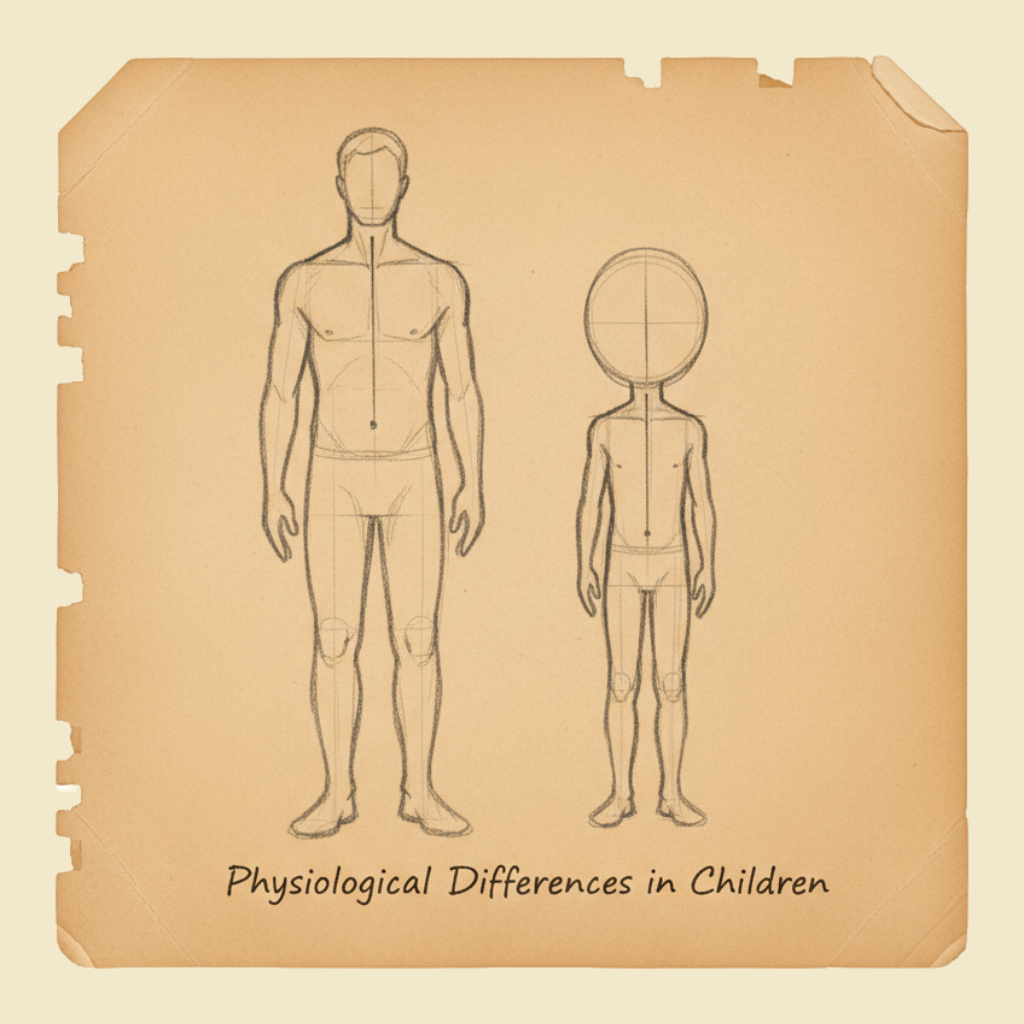
The single most useful sentence to carry into paediatric first aid is: a child is not a small adult. The body of an infant or young child is structurally and functionally different from an adult body in ways that change how illness presents, how injuries occur, how the body compensates for stress, and how first aid interventions should be applied. The educator who knows the differences responds better than the educator who is mentally treating the child as a miniaturised grown-up. G9.2.1 G9.2.4
This chapter is the why underneath many of the what to do instructions in the rest of the unit. It is short on procedures and long on the reasoning that explains, for example, why infants need a finger or two-thumb compression rather than a heel, why a fever can trigger a seizure in a small child but not an adult, why a scald can be a much more serious injury in a toddler than in an adult, and why a child's airway can obstruct from a cause that would barely register in an adult. Understanding the why makes the what easier to remember and easier to apply correctly under stress.
§ Instructor's note
The teaching point of this chapter is that the rules of paediatric first aid are not arbitrary — they follow from real differences in anatomy and physiology, and once the educator understands the differences the rules become almost obvious. Drill the rule: different airway, different breathing, different circulation, different surface, different brain, different bones — and the response adapts to each.
Children develop, and the differences shrink with age
Before going through the differences, a calibration: the differences are most pronounced in infants (under 1 year), still significant in toddlers (1 to 3 years), reduced in preschoolers (3 to 6), and largely gone by school age (6 and up). A 10-year-old is, anatomically and physiologically, much closer to an adult than to an infant. The "child is not a small adult" warning applies most strongly at the younger end and gradually fades as the child grows. The educator should think of this as a sliding scale rather than a binary.
The HLTAID012 unit covers the full age range that most education and care services see — birth to about 12 in OOSH care — and the differences below apply most strongly to the younger end of that range.
The airway
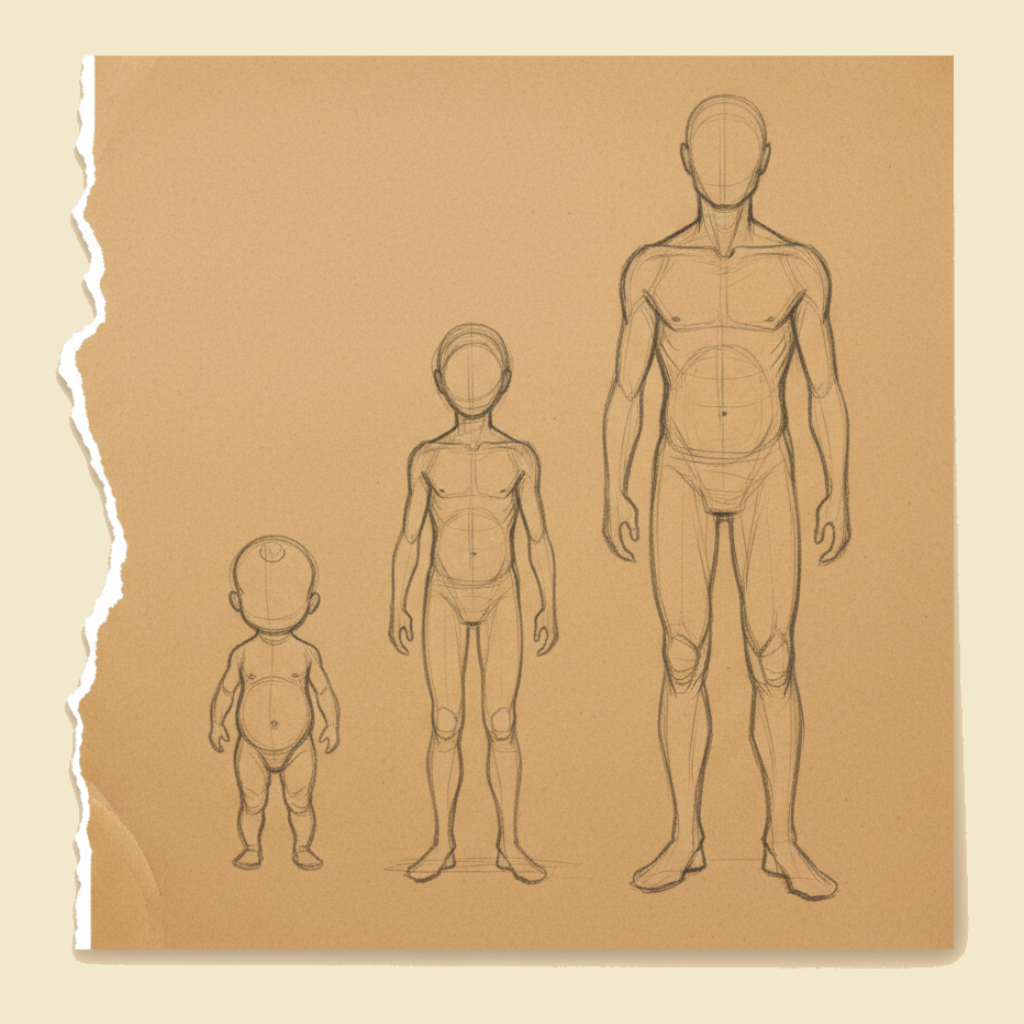
The infant and young-child airway is different from the adult airway in several ways that matter for first aid:
- The head is proportionally larger. An infant's head is about a quarter of their body length (compared with about a seventh in an adult). The large head means that when a baby is laid flat on their back, the head naturally tilts forward and the chin drops onto the chest, partially obstructing the airway. The fix is to keep the airway in a neutral position — not extended like an adult's, not flexed onto the chest. A small folded towel under the shoulders helps. See the upper airway chapter.
- The tongue is proportionally larger relative to the mouth and pharynx. This means an unconscious child is more prone to airway obstruction by the tongue than an adult. The recovery position and the airway-opening manoeuvres still work, but the tongue is closer to filling the available space.
- The airway itself is smaller and more compliant. The trachea of an infant is about 4 to 5 mm in internal diameter (compared with 12 to 15 mm in an adult), and the soft tissues around it can collapse inward more easily. A small amount of swelling that an adult would not notice can dramatically reduce the airway calibre — this is why croup (viral upper airway swelling) is a significant illness in toddlers but a non-event in adults.
- The narrowest point of the paediatric airway is at the cricoid cartilage, just below the vocal cords (in adults the narrowest point is the vocal cords themselves). This is mostly a consideration for medical intubation and not a first aid concern, but it explains why some upper airway obstructions present with a particular pattern in children.
- The epiglottis is more floppy and protrudes more. This is what produces the characteristic stridor of croup and contributes to the obstruction of inhaled foreign bodies.
The implications for first aid:
- Position the head neutrally, not in the extended sniffing position used for adults.
- Be alert to airway swelling as a serious problem in young children. Croup, anaphylaxis, severe tonsillitis, and inhaled small objects all have more airway impact in a child than in an adult.
- Use age-appropriate manoeuvres for choking — see the choking chapter.
- Recognise stridor (high-pitched inspiratory noise) as an upper airway obstruction sign that should trigger urgent action.
Breathing
Children's breathing is fundamentally different from adult breathing:
- The respiratory rate is much higher. An infant breathes at 30 to 60 per minute; an adult at 12 to 20. The high rate is partly because the smaller body needs less air per breath and partly because the metabolic rate is higher.
- The tidal volume is much smaller (a newborn breathes about 7 mL per kg per breath; an adult about 6 mL per kg, so the ratio is similar but the absolute volume is tiny — a few teaspoons rather than half a litre).
- Children breathe diaphragmatically rather than with the chest wall. Watch a sleeping baby and you will see the abdomen rise and fall while the chest stays relatively still. This is normal. Anything that prevents the diaphragm from moving — a tight nappy, a tight clothing wrap, an abdominal injury — can compromise breathing.
- Children rely on rate to compensate for increased oxygen demand. An adult who needs more oxygen takes deeper breaths; a child takes more breaths per minute. This is why fast breathing (tachypnoea) is the earliest sign of respiratory distress in a child.
- The respiratory reserve is much smaller. Children have less spare capacity than adults; they cannot sustain hard work of breathing for long before they exhaust themselves.
- Hypoxia leads to bradycardia in children, not tachycardia as it does in adults. A child with severely impaired breathing can develop a slow heart rate as the heart muscle itself becomes hypoxic — and the slow heart rate is a late and serious sign that cardiac arrest is imminent.
The implications for first aid:
- Fast breathing matters in children. It is the early sign of respiratory distress and should not be ignored. See the breathing difficulties chapter.
- Increased work of breathing (recession, nasal flaring, accessory muscle use, head bobbing) is a critical sign in children — see the same chapter.
- A slowing respiratory rate in a child who has been working hard to breathe is not improvement — it is exhaustion and impending arrest.
- Most paediatric cardiac arrests are secondary to respiratory failure, which is why airway and breathing are the priority in paediatric resuscitation. Get the breathing right and you have prevented most arrests.
- Rescue breaths are an essential part of paediatric CPR — see the chest compressions and rescue breaths chapter.
Circulation
Children's circulation differs from adults' in ways that explain a lot of paediatric first aid:
- The heart rate is much higher. An infant's normal resting heart rate is around 100 to 160 beats per minute; a toddler's around 90 to 150; a school-age child's around 70 to 110. An adult's is around 60 to 100. The high heart rate provides cardiac output in a small body with a small stroke volume.
- The blood volume is small in absolute terms. A 10 kg toddler has only about 800 mL of blood (compared with 5 litres in an adult). This means a "small" amount of blood loss can be a much larger proportion of the total volume — what looks like a moderate bleed in an adult can be life-threatening in a toddler.
- Cardiac output depends on heart rate. Children's hearts contract less strongly and their chambers cannot stretch as much as an adult's, so the way they increase their cardiac output when they need more is by speeding up. This is why tachycardia is a key sign of stress in a child.
- Blood pressure stays normal until very late in shock. Children compensate for blood loss or fluid loss by speeding up the heart and constricting peripheral vessels, and their blood pressure can stay in the normal range until they are very close to decompensation. By the time the blood pressure drops, the situation is severe. This is why blood pressure is an unreliable early sign of shock in children, and why the educator should rely on heart rate, capillary refill, skin colour, and mental state instead.
- The decompensation, when it comes, is rapid. A child can look stable and then crash within minutes once the compensation fails. This is one of the key features of paediatric emergencies and one of the most important things for educators to understand.
The implications for first aid:
- Take small blood losses seriously in young children. A wound that would be unremarkable in an adult can be a real concern in a toddler.
- Recognise the signs of shock early — fast pulse, slow capillary refill, cool extremities, mottled skin, irritability or drowsiness — before the blood pressure drops. See the shock chapter.
- Do not be reassured by a "normal" blood pressure in a sick child. Normal blood pressure in a child who looks unwell is the calm before the crash.
- Act quickly once you have decided to act. Children deteriorate fast.
- CPR ratios and depths are different for children — see the chest compressions and rescue breaths chapter and the hand positioning for compressions chapter.
Body surface area and temperature regulation
Children have a high body surface area relative to their body mass — much higher than adults. This has several consequences:
- Heat loss is faster. A wet, undressed child loses heat to the environment quickly. Hypothermia in a young child can develop in conditions an adult would find merely cool. See the hypothermia chapter.
- Heat gain is faster. A child in a hot environment heats up faster than an adult. Children left in hot cars die in conditions an adult would find merely uncomfortable. See the hyperthermia chapter.
- Burns affect a larger proportion of body surface. A scald that covers an adult's hand might cover a toddler's whole arm and chest — the same amount of damaged skin is a much higher percentage of total body surface. Burn severity in children is judged by percentage burned, and small absolute areas can be high percentages. See the burns chapter.
- Fluid loss through damaged or burned skin is faster in children, leading to dehydration sooner.
- Cooling strategies for fever need to account for the rapid heat exchange — over-aggressive cooling can drop a child's temperature too far.
The implications:
- Keep injured or unwell children warm — but not hot. A blanket, a closed room, but not bundled excessively.
- Recognise burns as proportionally more serious than the same area would be in an adult.
- Watch for hypothermia in conditions you might think mild — a child left in wet clothes after swimming, a child with extensive burns, a child unconscious on a cold floor.
- Watch for heat illness in hot weather, in cars, in playgrounds with no shade. The threshold for heat-related illness is much lower in children than in adults.
The brain
The developing brain has features that matter for first aid:
- The fontanelles — soft spots on the skull where the bones have not yet fused — allow the brain to grow but also provide a window onto its condition. A bulging fontanelle can indicate raised intracranial pressure (meningitis, head injury); a sunken fontanelle can indicate dehydration.
- The skull is more flexible in infants and toddlers, which absorbs some of the impact of head injuries but also means the brain has more room to move and shear during impact.
- The seizure threshold is lower in young children. The same febrile illness that produces no seizure in a 10-year-old can produce a febrile convulsion in a 2-year-old. See the febrile convulsions chapter.
- The level of consciousness can be harder to assess. A child with reduced consciousness may simply look "sleepy" or "withdrawn" rather than visibly drowsy, and the educator has to use the broader behavioural picture to recognise it. See the signs of acute illness in children chapter.
- Children describe pain and symptoms less reliably than adults — not because they feel less, but because they have less vocabulary and less ability to localise sensation. See the pain chapter.
The implications:
- Take any change in alertness seriously. A child who is unusually drowsy, withdrawn, or hard to engage is a child who needs assessment.
- Use the fontanelle as a sign in infants — bulging or sunken are both abnormal.
- Be aware that head injuries in children can cause significant brain injury without dramatic external signs, because the skull is flexible and the brain is fragile. See the head neck spinal injuries chapter.
- Watch for the combination of fever and seizure in toddlers — common, usually benign, and managed with the febrile convulsion response.
Bones and joints
Children's bones and joints have features that affect injury patterns:
- Bones are softer and more flexible because they have more cartilage and less mineralisation. Paediatric fractures often look different from adult fractures — greenstick fractures (where the bone bends and partially breaks like a green stick) and buckle fractures (where the bone buckles without fully breaking) are common in children and rare in adults.
- Growth plates at the ends of long bones are areas of cartilage that can be injured. Damage to a growth plate can affect the bone's later growth and is taken seriously by orthopaedic specialists.
- Joints are more flexible and tolerate stretching more than adult joints. A child can have a limb pulled into an unusual position without obvious injury, but the underlying ligament damage may still be significant.
- The ribcage is more compliant. A child's ribs are more elastic and can flex significantly without breaking. This is why chest compressions can be performed effectively on a young child despite the smaller body, but it also means that significant chest trauma can occur without rib fractures — the energy is transmitted to the underlying organs instead.
- Pulled elbow (radial head subluxation) is a paediatric-specific injury where the head of the radius slips out of the annular ligament, usually after a child has been pulled by the arm. It causes the child to refuse to use the arm; the diagnosis and treatment is by a doctor.
The implications:
- A child who refuses to use an arm or leg after an injury may have a fracture even if there is no obvious deformity. Refer for medical assessment.
- A pulled-arm injury in a young child — the classic story is "she was about to step off the curb so I grabbed her arm" — is suggestive of pulled elbow. Refer for medical assessment.
- Chest compressions on a child are performed at one-third the depth of the chest, which is less than for an adult in absolute terms but proportionally similar.
- Treat all suspected fractures conservatively — immobilise, elevate, ice, refer. See the fractures and sprains chapter.
Metabolism and energy reserves
Children have higher metabolic rates per kg of body weight than adults, and smaller energy reserves:
- Glycogen stores (the body's quick-access energy source) are smaller in children and are used up faster during stress, illness, or fasting. This is why a sick child can develop hypoglycaemia (low blood sugar) more easily than an adult, and why children with diabetes are at higher risk of severe hypoglycaemic episodes. See the diabetes chapter.
- Fluid balance is more delicate. Children have less buffering capacity against fluid loss and gain. See the dehydration chapter.
- Body water proportion is higher in infants — about 75% of body weight, compared with about 60% in adults — and the water is distributed differently. Loss of even a moderate volume can produce significant dehydration.
- Drug metabolism is different. Children process drugs at different rates than adults, and doses are calculated by weight rather than as a fixed amount. This is one of the reasons educators do not administer medications without specific authorisation — the dose depends on the child's weight and the educator is not in a position to calculate it.
The implications:
- Sick children need their fluids and food maintained. A child who has not eaten or drunk for hours during an illness can deteriorate from low blood sugar and dehydration alone, separate from the underlying illness.
- Children with diabetes need their plan followed precisely. See the emergency action plans chapter.
- Recognise hypoglycaemia signs — irritability, sweating, drowsiness, weakness — in any child who is unwell, and offer something sugary if they are alert enough to take it safely.
- Do not administer medications without specific written authorisation and dose instructions for that child.
The immune system
The young child's immune system is still developing, and children get more infections than adults — particularly when they first enter group care. Some implications:
- Frequent viral illnesses are normal in young children, particularly in their first year or two at the service. The immune system is meeting pathogens for the first time and learning to respond.
- Some serious infections present subtly in young infants because the immune response is muted. Fever in a baby under 3 months is always taken seriously for this reason.
- Vaccination protects against the most serious infections of childhood. Most Australian children are well-vaccinated, and the diseases that used to be common (measles, mumps, diphtheria, tetanus, whooping cough, Hib meningitis, rotavirus) are now rare. The educator should know the service's immunisation policy and how it relates to enrolment.
- Children spread infections to each other and to staff through close contact, shared toys, shared food, and the general circumstances of group care. Infection control is therefore a higher priority in ECEC than in many other settings. See the infection control chapter.
How the differences combine
The features above do not act in isolation. They combine to produce the characteristic patterns of paediatric emergencies:
- Respiratory illness leads to cardiac arrest because the small respiratory reserve, the easy airway compromise, and the heart's reliance on adequate oxygenation all interact.
- Dehydration leads to shock fast because the small fluid reserve, the heart's compensation by tachycardia, and the late drop in blood pressure all combine to produce a child who looks stable until they suddenly aren't.
- Hypothermia from a wet child combined with a small body and high surface area can develop in conditions an adult would barely notice.
- A serious head injury in a young child can occur from a fall that an adult would walk away from, because the head is proportionally heavier and the brain is more vulnerable.
- A choking incident can be a true airway emergency in seconds because the airway is small and the reserve is minimal.
The educator who understands these patterns understands paediatric emergencies in a way that no checklist alone can convey.
The most important physiological fact for the educator to internalise is the speed of paediatric decompensation. A child with a serious illness or injury often looks better than they should for longer than they should — because their body's compensations are powerful and well-tuned. When the compensations fail, they fail rapidly, and the child can go from "looking unwell" to "in arrest" in a matter of minutes. The corollary is that the educator should not wait for late or dramatic signs before acting. The early signs are the moment to act, because by the time the late signs appear, the situation may already be irreversible.
What this means for first aid
A few practical takeaways from the differences:
- Trust the early signs of illness or injury in a child. Do not wait for the dramatic late signs.
- Act fast when you have decided to act. Children deteriorate quickly once they cross the threshold into decompensation.
- Use age-appropriate techniques for CPR, choking, airway management, and medication. The procedures are different for a reason.
- Be alert to airway and breathing as the most common pathway to paediatric arrest. Get the breathing right.
- Watch for shock signs beyond blood pressure — heart rate, capillary refill, skin colour, mental state.
- Keep injured or unwell children at the right temperature — neither cold nor hot.
- Take small blood losses seriously in young children.
- Recognise burns as proportionally larger in children.
- Call 000 sooner when the situation is unclear. The dispatcher and the paramedics can downgrade if necessary; you cannot easily upgrade once you have lost time.
- Know the children in your care — their normal, their conditions, their plans, their families. The familiarity is what makes the recognition work.
The educator is not a paediatrician, a paramedic, or a nurse. The educator is not expected to know everything in this chapter at the level a medical professional would. What the educator is expected to know is enough to recognise a child in trouble, respond with the appropriate first aid, and escalate to the next level of care. The physiological background helps because it explains why the responses are what they are — and the educator who understands the why is the educator who remembers the what under stress. Read this chapter once for the calibration; come back to the condition-specific chapters for the practical steps.
The anatomical and physiological features of infants and children differ from those of adults in ways that affect the recognition, management, and outcome of medical emergencies. The paediatric airway is smaller and more easily obstructed; the respiratory reserve is lower and respiratory failure is the most common cause of paediatric cardiac arrest; the cardiovascular system compensates for stress with tachycardia until very late in decompensation; the body surface area is high relative to body mass, predisposing to rapid temperature change and disproportionate burn injury; the brain is more vulnerable to injury and the seizure threshold is lower; and the bones and joints have unique injury patterns. First aid for children should be informed by these differences and adapted to the developmental stage of the casualty.
What not to do
- Do not treat a child as if they were a small adult.
- Do not assume a normal blood pressure means a child is not in shock.
- Do not wait for late signs of respiratory distress before acting.
- Do not use adult CPR ratios, depths, or techniques on infants and young children.
- Do not under-dress or over-dress a child for the environment — keep them at a comfortable temperature.
- Do not dismiss small wounds as trivial just because they would be trivial in an adult.
- Do not delay 000 because you are unsure whether the situation is "really serious".
- Do not rely on the child's verbal report alone — look at the body, the behaviour, and the broader picture.
- Do not assume the response in this chapter is comprehensive; it is the orientation, and the condition-specific chapters are where the detail lives.
You will not be tested on the physiological differences as a list. You will be tested on the practical applications — knowing why an infant's airway is positioned neutrally, why a child's tachycardia matters, why a small burn is bigger than it looks, and so on. The instructor will work through the differences in the context of the practical scenarios and will return to them in the condition-specific drills throughout the course.
A child is not a small adult, and the differences are not academic. The smaller airway, the fast breathing, the compensating heart, the high body surface, the developing brain, and the flexible bones all combine to produce a casualty who looks stable for longer than they should and then deteriorates faster than expected. The educator who understands the differences responds in time. The educator who treats the child as a small grown-up is the one who acts too late. Know the differences, trust the early signs, act fast when you have decided to act, and use the techniques designed for the body in front of you.
— ANZCOR Guideline 9.2 (paediatric basic life support)