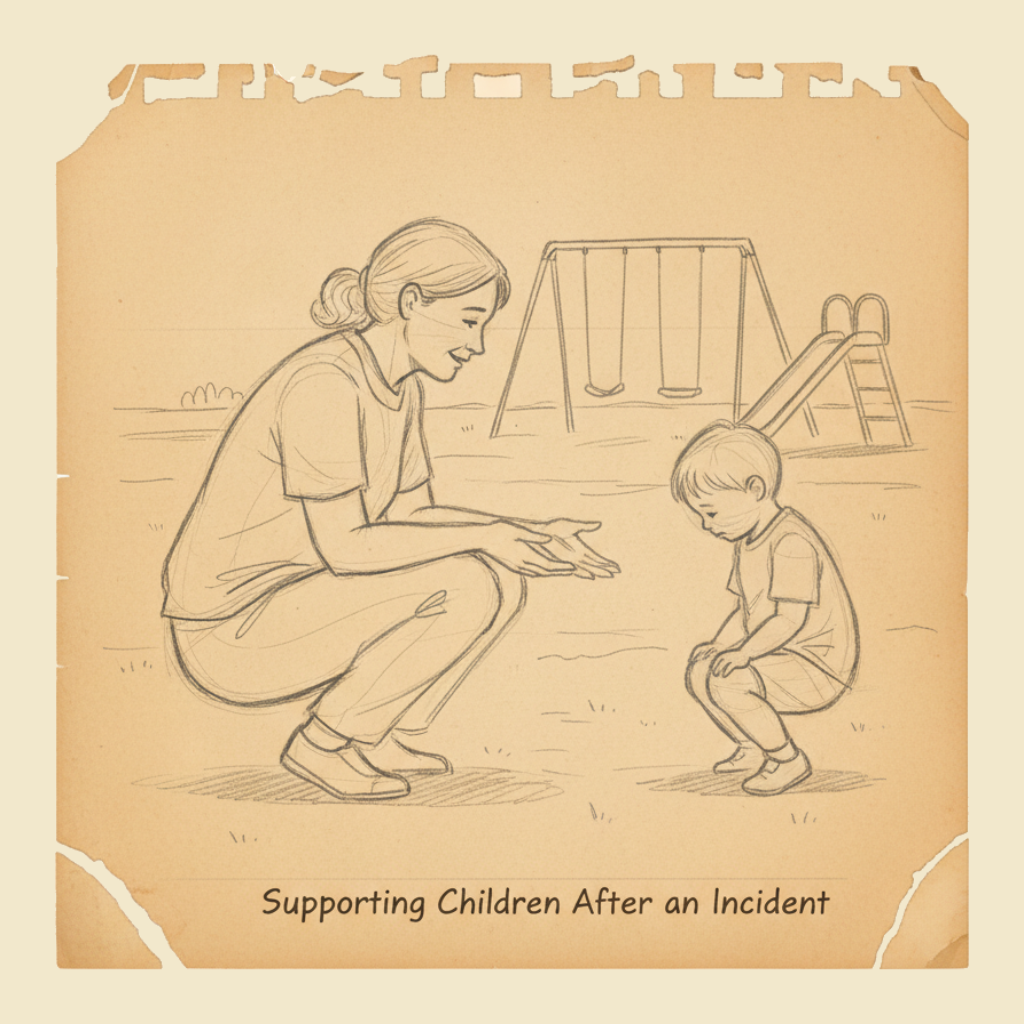
Why this chapter exists
When a serious incident happens at an education and care service — a child in anaphylaxis, a seizure, a near-drowning, a serious fall, a child who has stopped breathing — the immediate response is the part most first aid training covers. The first aider learns the technique, the protocol, the call to 000, the handover to the ambulance, and the documentation. What gets less attention is what happens after the immediate crisis is over. The child has been handed over, the ambulance has left, the parents have been called. The room is full of children who have just watched the whole thing. The educator who provided the care is shaking. The other educators are quiet. The day still has hours to run.
This chapter is about that aftermath, for two groups: the educator (and any other adults who were involved) and the children (the casualty, if they remained at the service, and the other children who saw the incident). The principles overlap, but the responses are different, and both groups deserve attention. The broader workplace-stress framework — the same one that applies to any first aider in any setting — is in the rescuer stress support chapter, and the techniques for talking to a frightened child are in the communication and distraction chapter.
§ Instructor's note
The teaching point is that the psychological response to a serious paediatric incident is significant for everyone in the room and is not optional or weak. Educators sometimes feel they are being unprofessional by asking for support after an incident; the opposite is true — the educators who get help recover faster, stay in the sector longer, and manage their next incident better. Drill the rule: everyone is affected, the affect is normal, the support is the right thing to ask for, and the time to set up the support is before you need it.
What a serious incident does to an educator
A serious incident with a child triggers a cascade of physiological and psychological responses that the educator cannot turn off. In the moment, the body's stress response — adrenaline, cortisol, sympathetic nervous system arousal — drives the rapid action that the situation requires. After the incident, the same chemicals that helped during the response are still circulating, and they have to be unwound.
The common immediate after-effects:
- Shaking, trembling, or feeling weak in the legs. This is the unspent adrenaline draining out of the muscles. It is not weakness; it is physiology.
- Crying — sometimes during the response, more often once the immediate threat is past and the body recognises it can safely let go.
- A sudden need to sit down, eat, or drink water. The body has burned through its immediate energy reserves.
- Replaying the incident in the mind, often obsessively, in the hours after. The brain is reviewing what happened, what was done, and whether it was the right thing.
- Doubting the response — wondering if you missed something, did the right thing, gave the right dose, called 000 fast enough. The doubt is universal and usually unfounded.
- Difficulty concentrating on routine tasks for the rest of the shift.
- Vivid recall of specific sensory details — the colour of the child's lips, the sound of their breathing, the smell of vomit, the look on a parent's face. These details often persist longer than the broader memory of the incident.
These responses are normal. They are the brain and body processing an event that mattered. They do not mean the educator did anything wrong, is unfit for the work, or needs to leave the sector. They mean the educator is human and that the incident affected them, which is exactly what should happen.
What a serious incident does to children
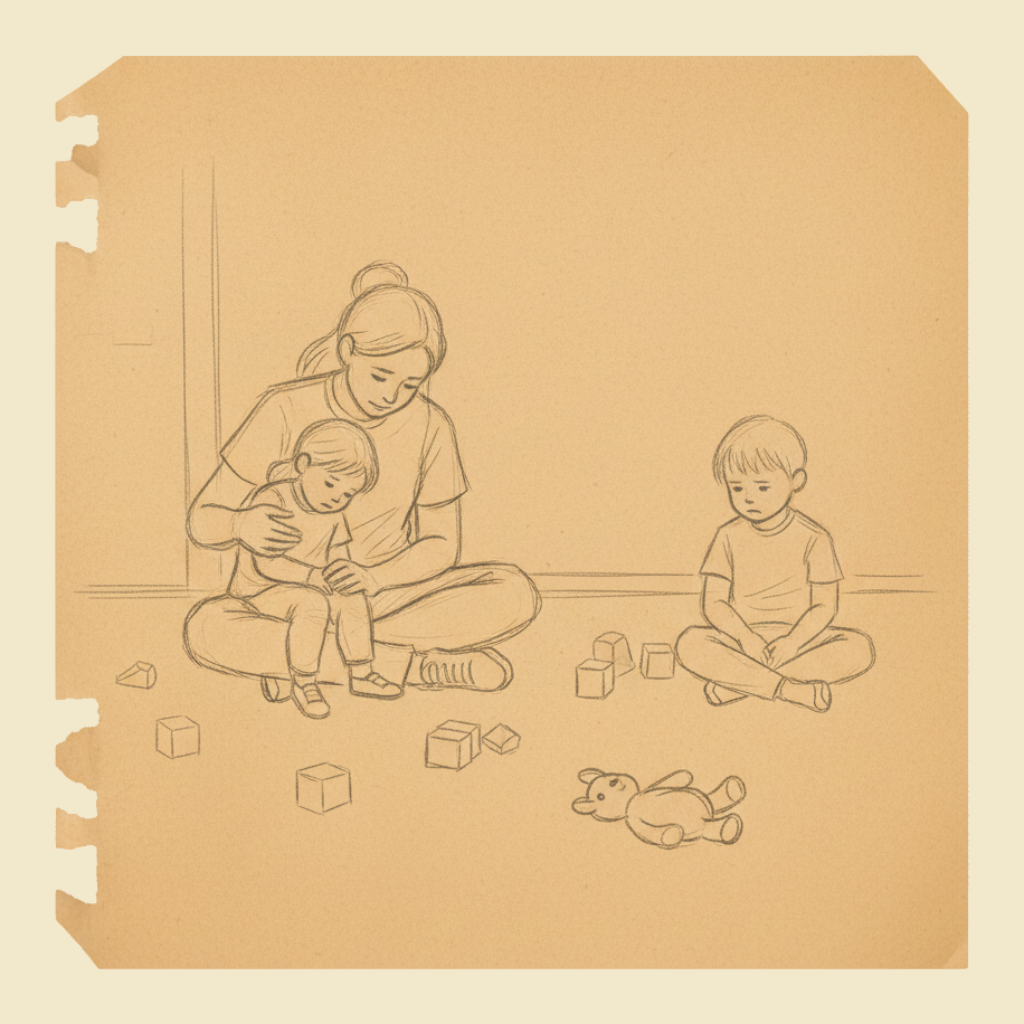
Children are observers, even when they look like they are not paying attention. When something serious happens at the service, the other children almost always see more than the adults realise. They see the running, the shouting, the fear on adult faces, the unfamiliar arrivals (paramedics, the parent rushing in), the absence of the child who was hurt. They register all of it.
The way children process serious incidents depends on their age and on their individual temperament:
- Toddlers may not have the words for what they saw, but they will show distress through changes in behaviour — clinginess, irritability, difficulty sleeping, regression in toileting or speech, more tears than usual at separation.
- Preschoolers can talk about what they saw, often in fragmentary ways, sometimes hours or days later. They may ask questions repeatedly, may want to enact the incident in play, and may need adult help to understand what happened.
- Older children (in OOSH settings) often have a more adult-style response — quiet withdrawal, asking detailed questions, sometimes anger, sometimes a desire to "help" by offering to fetch things or look after the casualty.
- The casualty themselves, if they are still at the service after the immediate response, will be feeling whatever the medical condition is plus the social experience of being the centre of an emergency. Both deserve attention.
Children's responses are also normal. They are not signs that the child is damaged or that something is wrong. They are signs that the child is processing an experience that was outside the ordinary, and the adults' job is to help them through the processing.
In the immediate aftermath — the next hour
Once the immediate emergency response is over (the ambulance has gone, the casualty is being managed, or the casualty is back in the group and stable), the educator's attention shifts to two things in parallel: looking after the children who are still in the room, and beginning the process of looking after themselves and the other adults.
For the children:
- Reassemble the group calmly. Resume the normal rhythm of the day as much as possible — snack, story, outdoor time, whatever was on the program. Routine is a powerful settler for children.
- Speak honestly but simply about what happened. "Sam got really sick and the ambulance took him to the doctor so they can help him feel better." Avoid graphic detail, avoid reassurances that may turn out to be wrong ("he's going to be fine"), and do not pretend nothing happened.
- Answer questions as they come, in language the child can use. Children often ask the same question several times; this is how they process. Each repetition deserves a calm, consistent answer.
- Allow play that references the incident. Children may play "ambulance" or "doctor" for days afterwards. This is healthy processing, not morbid fascination, and should be allowed (within obvious limits — no actual medication, no genuine injury reproduction).
- Watch for any child who is unusually withdrawn or distressed — they may need extra one-on-one attention, or their parents may need to be informed of the incident at pickup so the family can support them at home.
For the educator:
- Sit down, drink water, eat something. The physical recovery starts with the basics.
- Talk to a colleague — even a brief debrief with another educator who was there, or with the nominated supervisor, helps the brain start to process. Bottling it up makes the after-effects worse, not better.
- Hand over anything you cannot now manage. If your concentration is shot, ask a colleague to take the next activity, finish the documentation, or supervise the group while you have a few minutes alone.
- Do not drive home immediately if you are still shaky. Wait until the body has settled.
- Allow yourself to feel whatever you are feeling. Tears, anger, doubt, relief, exhaustion — none of them are wrong.
The structured debrief
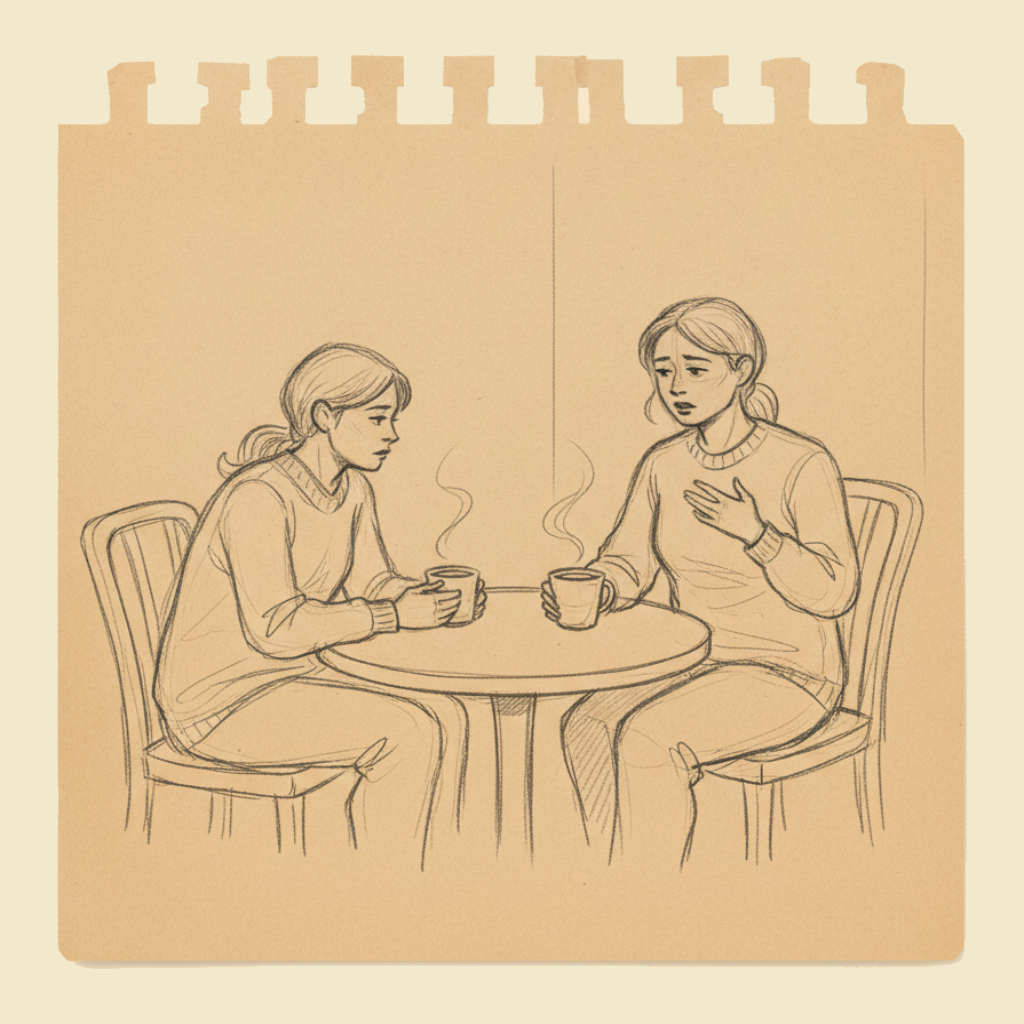
Most well-run services have a process for debriefing after a serious incident. The debrief is a structured conversation, usually within a day or two of the incident, between the educators involved and the nominated supervisor or director. Its purposes are:
- Information sharing — making sure everyone has a complete picture of what happened, in case different educators saw different parts.
- Emotional processing — giving the educators space to talk about how the incident affected them and to hear that their reactions are normal.
- Operational review — identifying what went well, what could be improved, whether any policies or procedures need to be updated.
- Identifying anyone who needs further support — and making sure they get it.
A good debrief is not a witch-hunt. It is not about finding fault or assigning blame. It is about learning, support, and moving forward. The tone should be calm, respectful, and curious rather than critical. If the service runs debriefs as performance reviews, educators stop participating honestly and the value is lost.
The first aider's role in the debrief is to give an honest account of what they saw and did, to ask any questions they have about the response or the protocols, and to be honest about how the incident affected them personally. The temptation to minimise the personal impact ("I'm fine, really, no need to make a fuss") is the wrong instinct. If you were affected, say so — both for your own benefit and so that the next educator who is affected feels able to say so too.
Longer-term support for the educator
For most incidents, the immediate response and a structured debrief are enough. The educator is shaken for a day or two, talks it through with colleagues and family, and gradually returns to baseline.
For more serious incidents — a child death, a near-fatal anaphylaxis, a sustained CPR — the recovery may take longer and may need more structured support. Watch for:
- Sleep disruption that persists beyond a few days.
- Intrusive memories or flashbacks that interrupt daily activities.
- Avoidance of work, of certain rooms, of certain children, of any reminder of the incident.
- Persistent anxiety about the next incident, even in routine situations.
- Changes in appetite, mood, energy, or relationships at home.
- Increased use of alcohol or other coping substances.
These are signs that the educator may benefit from professional support — an Employee Assistance Program (EAP), a counsellor, a GP, or in some cases a psychologist with experience in critical incident stress. Most education and care services have access to an EAP that offers free, confidential counselling for staff after critical incidents, and the nominated supervisor or director can arrange the referral.
There is no shame in needing this support. The work of caring for young children is emotionally demanding even on ordinary days; the work of responding to a serious incident with a child is on a different scale. Educators who use the available support recover faster and stay healthier in the long run than educators who try to manage alone.
The instinct to minimise the personal impact of a serious incident — to brush it off, to insist you are fine, to refuse the offer of debrief or counselling because you don't want to look weak or unprofessional — is the response that most often produces longer-term problems. The educators who acknowledge the impact and accept the support are the ones who come out of it well. There is nothing professional about ignoring your own well-being, and there is nothing weak about needing to talk to someone after watching a child stop breathing.
Longer-term support for the children
For most children, after a serious incident at the service, the immediate response (calm reassembly, honest simple explanation, return to routine, allowing play and questions) is enough. The child's resilience is real and most children move through the experience without lasting effect.
Some children need more. Watch for, and respond to:
- Changes in behaviour at the service — clinginess, withdrawal, regression, sleep difficulty at rest time, eating changes, aggression or unusual anxiety.
- Changes in behaviour at home, reported by the parent at pickup. Parents are often the first to notice and should be encouraged to share what they see.
- Persistent questions that suggest the child is still trying to make sense of what happened.
- A child who was particularly close to the casualty and may need extra explanation and reassurance about the casualty's wellbeing.
The educator's role for the children, beyond the immediate response, is to:
- Communicate with the parents about what happened, what the child saw, and how the child has been since. The parent is the child's primary support and needs to know what they are supporting their child through.
- Be patient with behaviour changes for the next few days or weeks, and respond to them with extra warmth rather than discipline.
- Work with the family to access any additional support if it is needed — a referral to a child psychologist, a conversation with the child's GP, or simply more communication between home and service.
- Document the child's response if it is significant, so that the record is available if the family or any later professional needs it.
The casualty themselves, if they return to the service, may need particular care. Other children may treat them differently — with curiosity, with anxiety, sometimes with the unintentional cruelty of children who don't know what to say. The educator's role is to help everyone return to the normal relationships of the room.
Communication with the families of all the children
A serious incident affects the whole community of the service, not just the families of the casualty. The parents of the other children deserve to know that something happened, what the service did about it, and how their own child seemed afterwards. The communication should be:
- Prompt — within a day or two, not weeks later.
- Honest about what happened — without breaching the casualty family's privacy. Names and identifying details are not shared without consent.
- Specific about what the service did — the response, the call to 000, the parent contact, the handover.
- Reassuring about the present — the casualty is being cared for, the other children are settled, the service is reviewing its procedures.
- Open to questions — parents may want to know more, may have concerns about their own child's response, may have practical suggestions.
The format is usually a written note (email, newsletter, or letter) followed by face-to-face conversation at pickup for any parent who wants it. The nominated supervisor or director leads this communication; the first aider may be involved in providing accurate information about the response, but is not usually the spokesperson. See the privacy and confidentiality chapter for the limits on what can be shared.
The death of a child in care is the most serious incident an ECEC service can experience and triggers a specific set of responses: an immediate notification to the Regulatory Authority, contact with the family, a coronial investigation, and significant ongoing support for the staff and the other families. The educators directly involved will need substantial professional support, often including counselling, time off work, and a careful plan for return to duty. Most services have a critical incident plan that sets out the steps; the nominated supervisor and the approved provider lead the response. As a first aider, your direct role ends when the immediate response ends, but the longer-term implications for everyone involved are real, and accepting the support that is offered is not optional in this situation — it is the responsible thing to do.
Building resilience before the incident
Most of the support discussed so far is reactive — what happens after a serious incident. The other side of the coin is building resilience before an incident happens, so that the educator and the service are better prepared when one does:
- Train regularly. First aid skills, CPR, EpiPen technique. Confidence in the technical response substantially reduces the psychological burden of having to do it for real.
- Read the policies. Knowing what the service expects you to do removes one source of in-the-moment uncertainty.
- Talk about hypothetical scenarios. Many services have a habit of discussing "what would we do if…" scenarios in staff meetings. These conversations are valuable and should not be dismissed as morbid.
- Know your colleagues. A team that has a strong working relationship before a crisis is much better able to support each other during one.
- Know your support resources. Where is the EAP number? Who is the nominated supervisor's after-hours contact? What is the service's critical incident protocol? Find out before you need it.
- Look after your general wellbeing. Sleep, exercise, social connection, the basics of mental health. None of these are first aid topics, but all of them affect how you respond to a crisis and how you recover from one.
The educators who come through serious incidents best are not the ones who never feel anything; they are the ones who have a network around them, a clear set of procedures, and the willingness to accept help when it is offered.
First aiders providing psychological support after a serious incident should focus on safety, calm, connectedness, self-efficacy, and hope. The same principles apply when the first aider themselves is the person needing support. Acknowledge the impact of the incident, ensure access to factual information, support the person's connection to family and colleagues, encourage them to take the practical steps that are within their control, and convey realistic hope that recovery is the normal path. Where the impact persists or interferes with daily life, professional support should be accessed.
What not to do
- Do not dismiss the educator's emotional response to a serious incident as weakness or unprofessionalism.
- Do not force an educator to keep working immediately after a serious incident if they are visibly shaken. A short break is not laziness.
- Do not keep a serious incident from the children. They saw what they saw; pretending it did not happen is more confusing than a calm honest explanation.
- Do not speculate to children about the casualty's outcome, particularly in ways that might turn out to be wrong.
- Do not breach the casualty family's privacy when communicating with the wider parent community.
- Do not treat the structured debrief as a fault-finding exercise. It is a learning and support exercise.
- Do not assume one debrief is enough for the most serious incidents. Some need follow-up, professional support, or longer-term review.
- Do not ignore your own warning signs. If you are struggling more than a few days after an incident, ask for help.
You will discuss the psychological aftermath of a serious incident in a small-group conversation, including the structured debrief format, the recognition of educators who need extra support, and the communication with the children and the wider parent community. You will not be tested on the recognition of post-traumatic stress symptoms in detail — that is a job for professionals — but you will be expected to know when to escalate, where to refer, and how to look after yourself in the immediate aftermath of an incident at your own service.
The first aid response to a serious incident with a child is the easy part to write down, but it is not the whole picture. The aftermath — for the child, for the other children, for the educator who was holding the situation together — is real, and it deserves the same intentionality as the immediate response. Look after the children, look after yourself, accept the support that is offered, and remember that needing help after a hard day is not a failure of professionalism — it is a sign that the day mattered.
— ANZCOR Guideline 10.5 (psychological first aid)